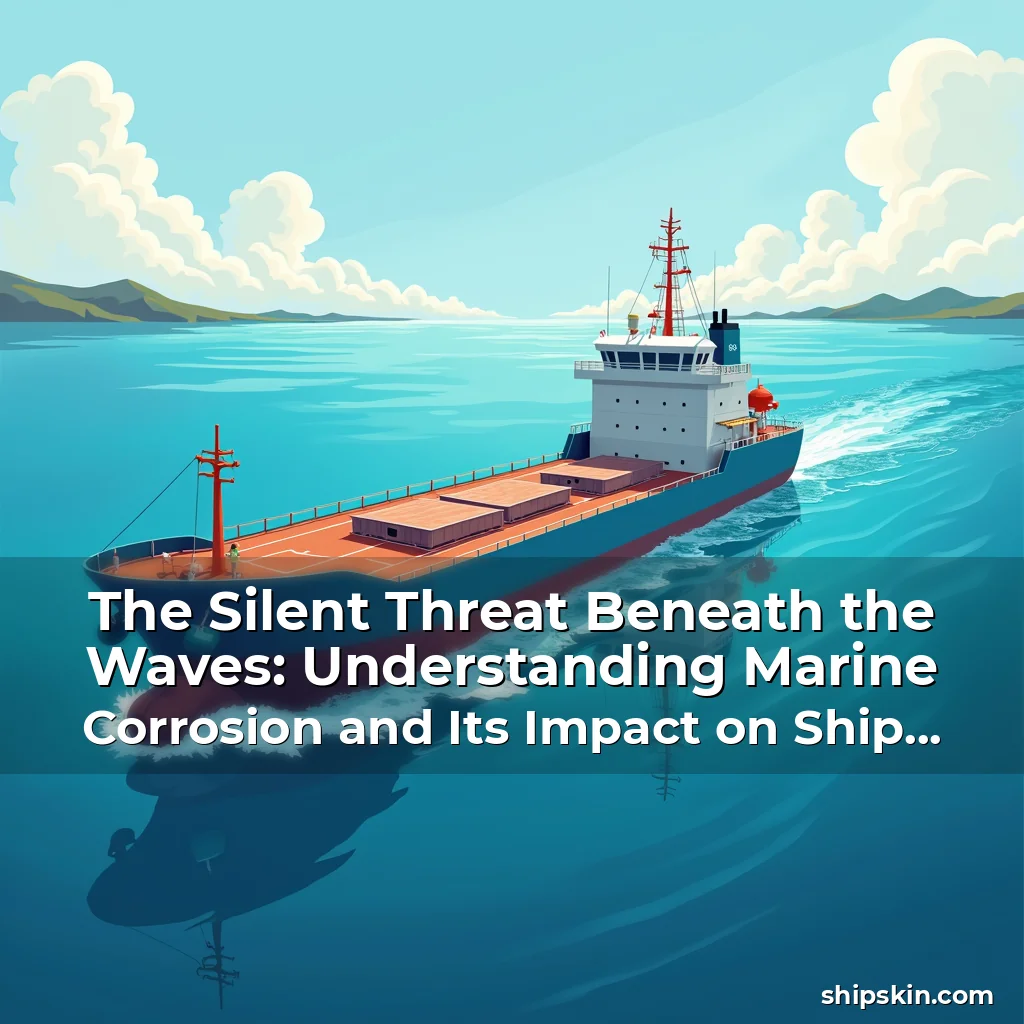
The Silent Threat Beneath the Waves: Understanding Marine Corrosion and Its Impact on Ship Integrity
In the vast expanse of the world’s oceans, where saltwater meets steel, a relentless adversary lurks—marine corrosion. This insidious process silently undermines the structural integrity of vessels, from colossal container ships to modest fishing boats, posing risks that extend beyond mere maintenance concerns.
Marine corrosion is not merely an engineering challenge; it is a complex interplay of chemical reactions, environmental conditions, and material properties that demand rigorous attention. As ship operators and maritime professionals navigate these challenges, understanding the nuances of marine corrosion becomes essential for ensuring safety, longevity, and operational efficiency at sea.
The Science Behind Marine Corrosion
At its core, marine corrosion is an electrochemical reaction driven by the presence of electrolytes—in this case, seawater—which facilitates the transfer of electrons between different parts of a metal surface.
This phenomenon occurs when two dissimilar metals are present within close proximity, creating what is known as a galvanic couple. In such scenarios, the less noble metal acts as the anode and corrodes while the more noble metal remains protected as the cathode.
To illustrate this concept further, consider a scenario involving copper and steel components connected together underwater. Here, steel will act as the sacrificial anode due to its lower nobility compared to copper, leading to accelerated rusting unless properly managed through protective coatings or sacrificial anodes.
A crucial factor influencing marine corrosion rates includes temperature fluctuations along with salinity levels found across various ocean regions. Higher temperatures generally increase ion mobility thus accelerating corrosive processes, making tropical waters particularly hazardous environments for unprotected metallic structures.
- Electrolyte concentration: Seawater contains approximately 3.5% dissolved salts primarily composed of sodium chloride which significantly enhances conductivity facilitating faster electron flow during oxidation-reduction reactions.
- Oxygen availability: Oxygen plays a vital role in promoting both uniform and pitting forms of corrosion especially under turbulent water conditions near propellers or rudders where increased oxygenation accelerates degradation mechanisms.
Mechanisms Driving Metal Degradation Undersea
Understanding how exactly metals degrade beneath the waves requires delving deeper into several key mechanisms responsible for initiating and propagating corrosion damage over time.
One primary mechanism involves localized attack patterns termed ‘pitting corrosion’ wherein small cavities form on exposed surfaces allowing moisture ingress followed by subsequent chemical breakdowns inside those pockets resulting in deep penetration without immediate visible signs until significant weakening has occurred.
Pitting corrosion can often go unnoticed until extensive internal decay renders critical systems nonfunctional—a dangerous situation given modern ships rely heavily upon intricate networks of piping systems susceptible to such hidden threats.
An additional concern arises from microbiologically influenced corrosion (MIC), where certain bacteria thrive within biofilms formed around submerged materials contributing to enhanced acidic conditions thereby intensifying overall deterioration rates.
These microorganisms utilize available nutrients present within biofilm layers producing sulfuric acid which dramatically lowers pH values causing severe stress cracking even in otherwise high-grade alloys used extensively throughout naval architecture today.
Impact Assessment Through Real-world Data
Data collected over decades indicates that MIC contributes up to 25% of all reported cases among offshore platforms globally highlighting its significance despite being relatively less understood than other types of corrosion phenomena.
Furthermore studies conducted by organizations like NACE International reveal that implementing effective MIC prevention strategies could potentially reduce annual repair costs related to pipeline failures by nearly $1 billion annually—an invaluable figure considering global shipping industry revenues exceed $8 trillion each year.
Strategies for Preventing and Mitigating Marine Corrosion
Evaluating practical approaches aimed at preventing or mitigating marine corrosion begins with identifying suitable protective measures tailored specifically towards particular applications aboard seafaring vessels.
Cathodic protection stands out as one of most widely employed techniques involving either impressed current methods using external power sources or sacrificial anodes made from more reactive elements like zinc or aluminum positioned strategically around vulnerable areas requiring protection.
Sacrificial anodes work effectively because they corrode preferentially instead of target metals thereby prolonging service life considerably whenever maintained regularly according to manufacturer guidelines regarding replacement intervals based on usage frequency factors.
Coatings also play pivotal roles including epoxy-based paints designed explicitly against harsh marine environments alongside specialized anti-fouling agents intended mainly for hull exteriors aiming simultaneously protect against biological growth which might exacerbate underlying corrosion issues.
Moreover recent advancements have led development of hybrid systems combining traditional coating technologies with smart monitoring devices capable detecting early stages of degradation before substantial harm ensues providing proactive rather than reactive management solutions beneficial long-term asset preservation goals.
Material Selection Criteria for Coastal Applications
Selecting appropriate construction materials represents another fundamental aspect determining susceptibility levels toward marine corrosion exposure faced daily by any vessel operating within coastal zones worldwide.
Stainless steels offer notable advantages owing their inherent resistance qualities derived from chromium content forming passive oxide films resistant against oxidative attacks however certain grades remain vulnerable under prolonged contact situations necessitating supplementary protections.
Aluminum alloys provide alternative viable options possessing natural immunity provided they maintain continuous layer coverage preventing access points enabling aqueous solution infiltration though alloy selection must carefully balance strength requirements versus potential vulnerabilities associated varying compositions.
Titanium presents exceptional performance characteristics exhibiting remarkable durability yet comes accompanied considerable financial burden limiting widespread adoption except special circumstances demanding absolute reliability irrespective cost implications involved.
Each choice entails trade-offs concerning initial investment versus lifecycle expenses therefore thorough evaluation phases incorporating projected operational timelines coupled precise environmental forecasts become imperative prior finalizing decisions impacting future maintenance schedules significantly.
Environmental Influences on Corrosion Rates
Variations observed among different geographic locations underscore importance recognizing diverse environmental influences affecting corrosion progression speeds experienced aboard maritime crafts traversing varied climates globally.
Regions characterized higher humidity combined elevated temperatures create ideal breeding grounds promoting rapid oxidation processes whereas colder northern latitudes typically witness slower degradation although extreme cold may induce brittle fractures reducing fatigue endurance capabilities substantially.
Salinity gradients exist naturally throughout open seas ranging anywhere between freshwater estuaries right down highly saline enclosed basins meaning careful consideration necessary tailoring preventative actions accordingly reflecting local aquatic composition profiles accurately.
Additionally wave action intensity affects erosion dynamics influencing particle abrasion rates potentially compromising coating adhesion strengths thereby increasing chances premature failure events occurring sooner than expected if neglected adequately.
Climate change introduces new variables altering precipitation regimes modifying evaporation patterns which subsequently impact fresh/saltwater interface positions ultimately shifting corrosion hotspots dynamically complicating predictive modeling efforts previously relied upon static assumptions.
Detection Techniques and Monitoring Systems
Early identification of emerging corrosion symptoms proves crucial safeguarding investments tied closely maritime infrastructure requiring sophisticated diagnostic tools integrated seamlessly operational routines without disrupting normal functions carried out crews daily.
Non-destructive testing methodologies such ultrasonic thickness gauges enable accurate assessments measuring remaining wall thicknesses critical components without inflicting physical damage thereby preserving original structure integrity intact.
Corrosion rate estimators employing linear polarization resistance measurements facilitate quick evaluations quantifying extent damage incurred recently useful tracking trends identifying anomalies warranting closer inspection promptly.
Smart sensors embedded within composite materials continuously monitor health statuses transmitting real-time data wirelessly centralized control panels allowing instant alerts generated whenever thresholds exceeded indicating possible incipient problems needing urgent intervention before escalation.
Integration artificial intelligence algorithms analyzing historical datasets helps forecast probable weak spots predicting likely sites experiencing accelerated wear enabling preemptive reinforcement works scheduled ahead avoiding unexpected downtime interruptions costly delays revenue losses.
Case Studies Highlighting Successful Corrosion Management
An exemplary instance showcasing successful implementation preventive strategies revolves around Norwegian oil platform installations where stringent adherence protocols utilizing advanced cathodic protection schemes resulted zero incidents recorded over fifteen consecutive years despite continual exposure aggressive North Sea conditions.
Similarly Japanese ferry services adopted dual-layered paint systems featuring nano-polymer additives enhancing barrier effectiveness resisting UV radiation degradation keeping exterior finishes pristine appearance maintaining hydrodynamic efficiencies required optimal fuel economy outcomes consistently achieved targets set regulatory bodies overseeing commercial transport sectors nationwide.
Within US Navy fleet operations, deployment automated inspection drones equipped multispectral imaging cameras allowed comprehensive surveys entire hull structures uncovering concealed defects undetectable conventional visual inspections alone thereby improving response times addressing identified flaws swiftly minimizing risk human error factors traditionally linked manual assessment procedures.
These examples collectively demonstrate that meticulous planning execution robust mitigation frameworks indeed achievable attaining desired standards sustainability resilience demanded modern seafaring endeavors confronting ever-evolving technological landscapes contemporary maritime industries navigate successfully.
Fuel Efficiency and Economic Implications of Corrosion Control Measures
Properly implemented corrosion control strategies yield benefits extending far beyond structural preservation encompassing significant improvements energy consumption metrics translating directly economic gains realized through optimized propulsion efficiencies reduced drag forces encountered during transit journeys across vast distances.
Smooth surfaced hulls free from accumulated barnacle colonies maintain streamlined contours decreasing frictional resistance encountered moving forward thereby lowering engine loads consequently consuming lesser amounts fossil fuels achieving better miles per gallon ratios benefiting both ecological footprints bottom lines alike stakeholders invested profitable ventures reliant reliable transportation networks connecting disparate regions globe wide.
Estimates suggest that every dollar invested in preventive maintenance returns approximately three dollars saved through avoidance expensive repairs replacements would’ve otherwise required had neglect persisted unchecked leading catastrophic failures jeopardizing lives cargo valuables alike.
Thus integrating comprehensive corrosion management programs constitutes strategic decision-making enhancing profitability margins ensuring continued viability enterprises operating within competitive markets continually striving excellence innovation amidst rapidly changing global trade dynamics shaping tomorrow’s maritime commerce paradigms.
Future Trends in Anti-Corrosion Technology Development
Emerging research initiatives focused nanotechnology applications promise transformative advances offering unprecedented levels protection against corrosive aggressions leveraging microscopic-scale manipulations atomic structures yielding novel materials endowed self-healing properties inherently resilient hostile marine atmospheres.
Self-repairing polymers infused conductive nanoparticles respond stimuli such mechanical stresses generating localized electrical currents activating regenerative healing responses sealing microcracks autonomously eliminating need routine recoating interventions saving labor hours associated maintenance activities drastically.
Development intelligent coatings containing sensor arrays detect initial signs degradation initiating corrective actions automatically releasing encapsulated inhibitors precisely targeted affected zones restoring protective film functionalities instantly mitigating further propagation damage effectively.
Advancements biocompatible substrates foster symbiotic relationships beneficial microbial communities counteracting detrimental effects pathogenic organisms responsible MIC occurrences transforming once adversaries allies contributing ecosystem balance strengthening foundational defenses organically.
Such breakthroughs signify paradigm shifts transitioning passive defense models active engagement ecosystems cultivating symbiosis coexistence reinforcing structural assets indefinitely ensuring legacy enduring ages transcending temporal limitations imposed traditional metallurgical constraints previously dictated lifespans maritime constructs subjected relentless elemental onslaughts perpetual vigilance required sustain operational readiness perpetually.
Conclusion
Marine corrosion remains formidable obstacle facing maritime sector requiring sustained commitment innovative solutions adaptive strategies evolving technological landscape shaping future trajectories industry-wide transformations imminent horizon.
By embracing holistic approaches combining scientific rigor practical implementations informed policy directives fostering collaboration interdisciplinary experts across academia government private enterprise synergistically advancing collective knowledge base empowering societies harnessing resources responsibly navigating uncharted territories safely securely navigating boundless horizons offered vast blue planet Earth.