The Bottom Paint Planner
Your hull's wetted area bracketed by two formulas and measured with a tape, coverage read from the data sheet, the extra coat and a reserve counted, the paint bought in whole tins, and the prep done safely and within the rules
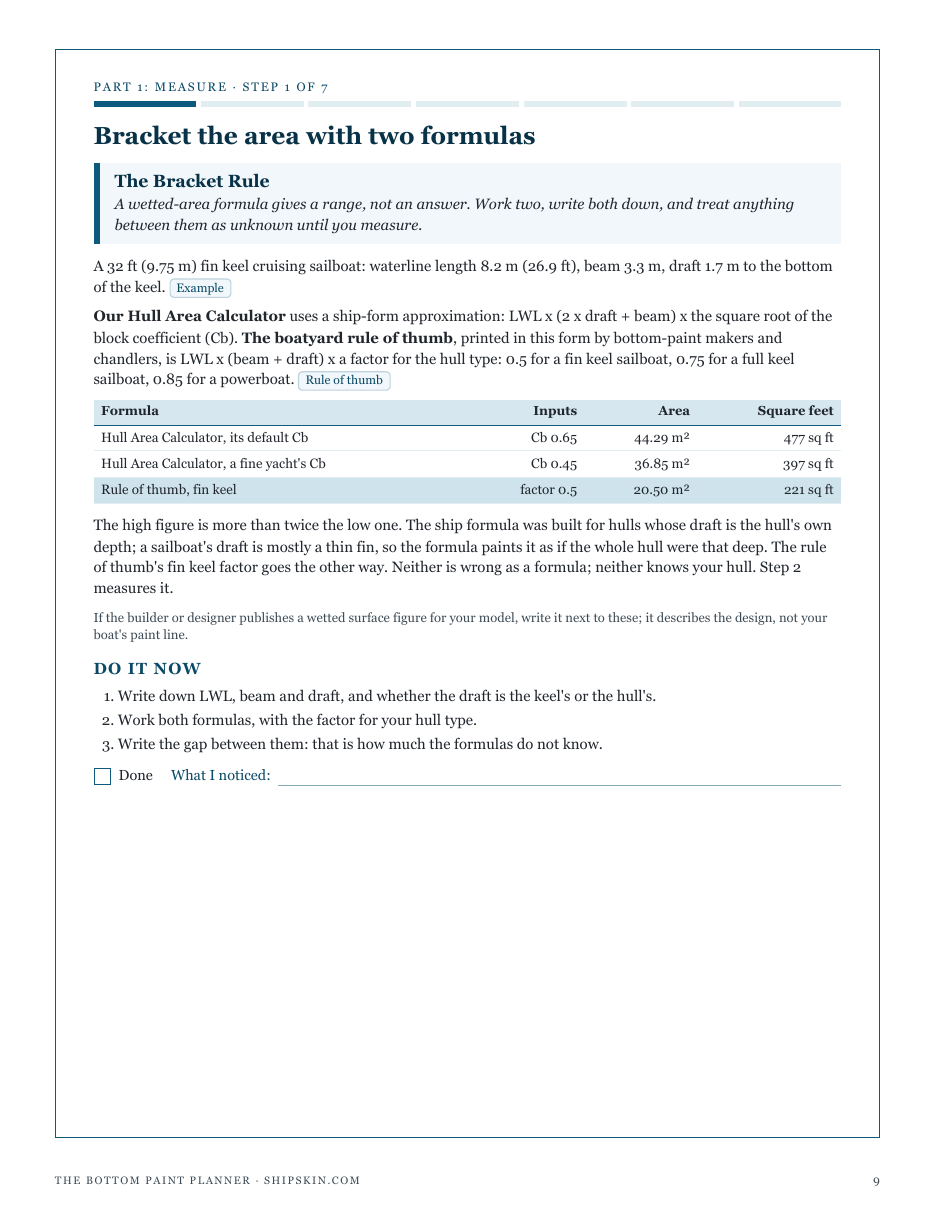
ShipSkin's free tools each answer one question, and a bottom job asks all of them at once. The Hull Area Calculator estimates a wetted area from a ship-form formula and says plainly that it is an estimate: measure, or use the builder's figure. Nothing on the site measured. On a sailboat that formula reads the keel draft as if the whole hull were that deep, and the boatyard rule of thumb goes the other way, so two quick formulas can disagree by a factor of two on the same boat. This planner puts the tools in order for one antifouling job. It brackets the area with both formulas, then measures the hull with a tape: seven half-girths along the paint line, doubled, plus the keel and rudder faces. It reads practical coverage off the paint's data sheet, adds the extra coat at the waterline and the leading edges and a reserve for the pad spots, and buys the cheapest mix of quarts and gallons, or 2.5 L and 0.75 L tins, that holds it. In the worked example, a 32 ft fin keel sailboat: the calculator says 44.29 m2, the rule of thumb 20.50, the tape 30.94; the rule of thumb's order runs out 62% of the way through the second coat, and the plan is 2 gallons and a quart. Every figure is computed by the site's own calculators, three of which we fixed while writing it; the worked numbers are examples and the loss, reserve and extra-coat zones are called rules of thumb. Antifouling is a regulated biocide: the planner tells you to check the label and the rules where your boat is kept, and sets out contained, protected prep on a properly supported hull. Included: 23 printable pages with a girth sheet, a paint order sheet, a haul-out checklist, a paint reference table and a quickstart, plus a personalised sheet worked from your own calculator figures.
Look inside
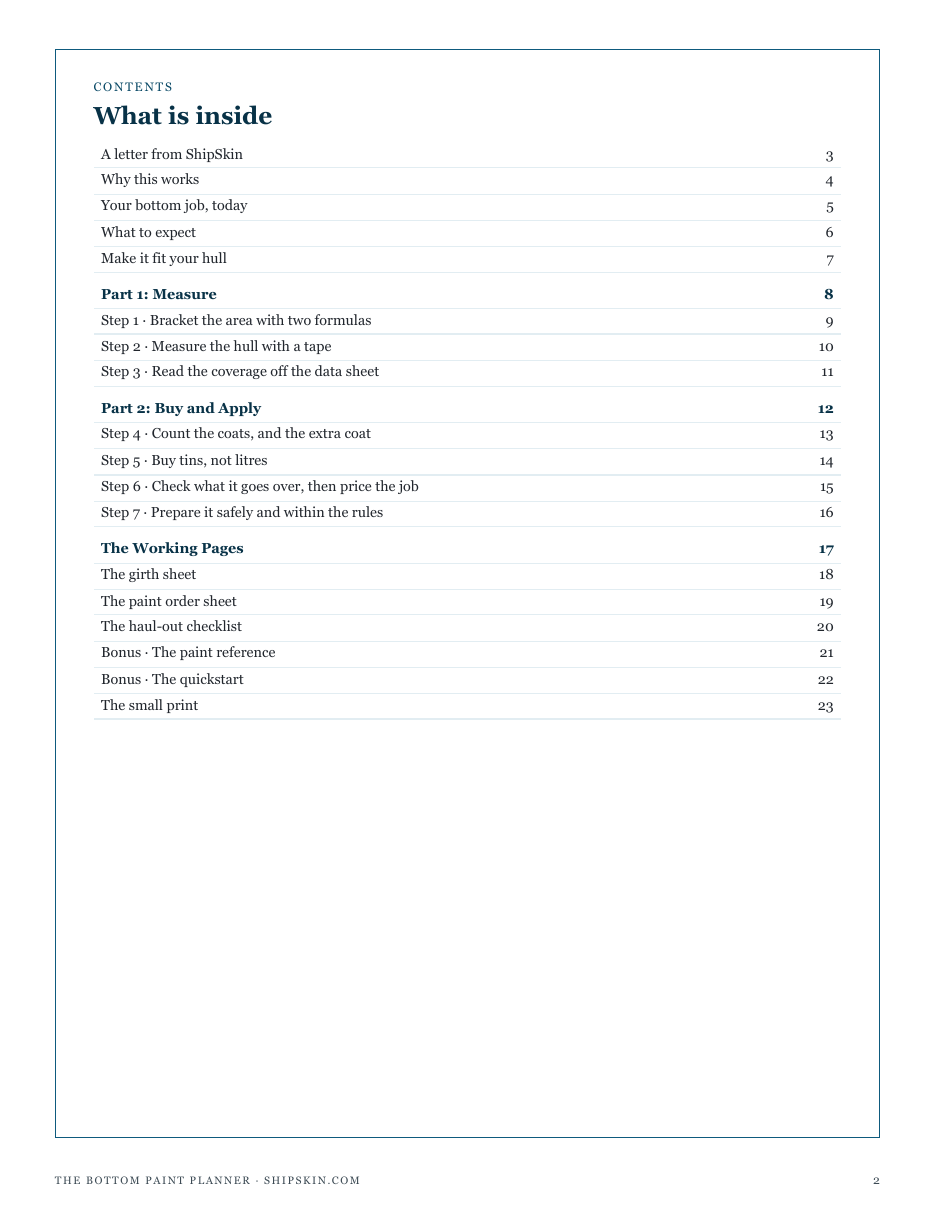
Two full pages from the planner, exactly as printed. Click either to read it at full size before you decide.
What is in it
- The Bracket Rule: the site's ship-form formula and the boatyard rule of thumb, worked side by side
- The Tape Rule: seven half-girths along the paint line, doubled, plus the keel and rudder faces
- The Data Sheet Rule: practical coverage from volume solids, DFT and a loss allowance, and the comb reading
- The Leading Edge Rule: the extra coat at the waterline band and the keel and rudder leading edges, and the reserve
- The Last Coat Rule: the cheapest mix of quarts and gallons, or 2.5 L and 0.75 L tins, that holds the paint
- The Compatibility Rule: what the new paint may go over, a primer only when the data sheet calls for one, and the whole budget
- The Containment Rule: respirator, tarps, no dust into the water, solvents, stands, and the rules on biocidal paint
- The girth sheet, the paint order sheet and the haul-out checklist (printable)
- The paint reference: paint to have and the tins to buy for any rolled area, at two coverages
- The quickstart, and a personalised sheet worked from your own calculator figures
- ✓ 23 printable pages
- ✓ 10 sections, worksheets and templates
- ✓ A second PDF worked out from the numbers you enter
- ✓ No account needed, just an email address
- ✓ Instant download; link valid 7 days
Price includes any taxes. Sold by GrabURL, who handle checkout and support. The charge appears on your statement as GrabURL.
The planner picks up where the free Hull Area Calculator leaves off. The calculator estimates a wetted area from a formula; the planner brackets it with the boatyard rule of thumb, measures the hull with a tape, reads the practical coverage from the paint's data sheet with the Paint Coverage Calculator, counts the extra coat at the waterline and leading edges, turns the Antifouling Paint Calculator's litres into the quarts, gallons or tins you can buy, and covers safe, contained prep. Antifouling is a regulated biocide: check the label and the rules where your boat is kept. The worked figures are examples.